“ The Empress and I have never met since that March afternoon when she bade me farewell. I cannot accept the almost overwhelming proofs of the tragedy of Ekaterinburg. From time to time reports of the safety of the Imperial Family have reached us, but the next moment we are faced with evidence that the whole of them have perished. God alone knows the truth, but I still permit myself to hope.After my interview with Kobilinsky I returned to Petrograd, where I spent some uneventful weeks. Poor Anna was right when she said that things were no better after the Revolution than they were before! ”
Ekaterinburg
Definition and stakes
Ekaterinburg, a Project 667BDRM Delfin-class nuclear-powered ballistic missile submarine, was commissioned in 1985 and later renamed after the Russian city of Yekaterinburg in 1999. Intended to carry nuclear missiles, it played a crucial role in Soviet and Russian naval strategy, undergoing extensive operational trials and modernization programs. Authors such as Lili Den and Eugenia Smith, however, examined the historical significance of the city of Ekaterinburg, where the Romanov family met its fate in 1918, incorporating its tragic history into stories of imperial collapse.
Meanwhile, historians like N. Sokolov analyzed the political maneuvering surrounding the Romanovs’ last days, while George Kennan described the city’s cultural and economic landscape. The submarine’s 2011 fire incident, which sparked worries about nuclear safety, highlights the lasting symbolic and practical importance of the name, connecting military technology with historical remembrance.
Quotes about “Ekaterinburg”
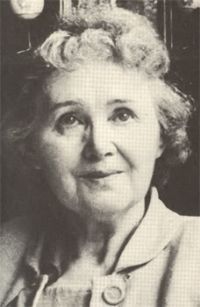 Eugenia Smith,
Anastasia: The autobiography of H.I.H. the Grand Duchess Anastasia Nicholaevna of Russia
(1963)
Eugenia Smith,
Anastasia: The autobiography of H.I.H. the Grand Duchess Anastasia Nicholaevna of Russia
(1963)
“ We had passed around the city on the train en route to Tiumen the summer before.Coincidentally the founder of Ekaterinburg was an ancestor of General Tatishchev who had dedicated the name Ekaterinburg to the Empress Catherine the Great. General Tatishchev was destined to be shot in his ancestor’s city of Ekaterinburg years afterwards. My Father had many friends and relatives interested in different business enterprises. The Imperial family owned the stone cutting works and had other commercial operations. Close friends of ours had extensive businesses in this region. ”
James P. Smythe, Rescuing the Czar: Two authentic diaries arranged and translated
“ The Ekaterinburg organization is weak as I already wrote you. First because the organization is in Ekaterinburg and the Emperor in Tobolsk.Who are these people? They want first of all, and altogether, restitution for the sake of getting good positions for valuable services rendered the Family. They all see that the restitution is problematic,—so their desire is not strong. They act weakly, they think lazily, they move with an agony of indifference. All that they have done is certainly known to Kobylinsky and—to the Commissaries. ”