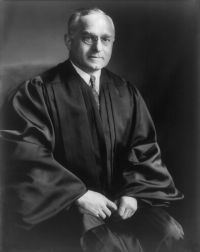
Felix Frankfurter

Felix Frankfurter

Summary

Portrait of Felix Frankfurter Felix Frankfurter McCollum v. Board of Education… (1948)

The non-sectarian or secular public school was the means of reconciling freedom in general with religious freedom. The sharp confinement of the public schools to secular education was a recognition of the need of a democratic society to educate its children, insofar as the State undertook to do so, in an atmosphere free from pressures in a realm in which pressures are most resisted and where conflicts are most easily and most bitterly engendered.
Source: Wikisource

Portrait of Felix Frankfurter Felix Frankfurter McCollum v. Board of Education… (1948)

Zealous watchfulness against fusion of secular and religious activities by Government itself, through any of its instruments but especially through its educational agencies, was the democratic response of the American community to the particular needs of a young and growing nation, unique in the composition of its people. [4] A totally different situation elsewhere, as illustrated for instance by the English provisions for religious education in State-maintained schools, only serves to illustrate that free societies are not cast in one mold.
Source: Wikisource

Portrait of Felix Frankfurter Felix Frankfurter McCollum v. Board of Education… (1948)

Resolve that neither the state nor the nation, nor both combined, shall support institutions of learning other than those sufficient to afford every child growing up in the land the opportunity of a good common school education, unmixed with sectarian, pagan, or atheistical dogmas. Leave the matter of religion to the family altar, the church, and the private school, supported entirely by private contributions.
Source: Wikisource

Get perspective with Kwize: daily news enlightened by great literature