Summary

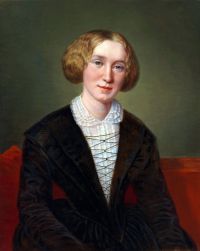
Portrait of George Eliot George Eliot Impressions of Theophrastus Such… (1902)

But man or woman who publishes writings inevitably assumes the office of teacher or influencer of the public mind. Let him protest as he will that he only seeks to amuse, and has no pretension to do more than while away an hour of leisure or weariness—"the idle singer of an empty day"—he can no more escape influencing the moral taste, and with it the action of the intelligence, than a setter of fashions in furniture and dress can fill the shops with his designs and leave the garniture of persons and houses unaffected by his industry.
Source: Wikisource

Portrait of George Eliot George Eliot Impressions of Theophrastus Such… (1902)

The impulse and act made the heroism, not the correctness of adaptation. No doubt the passionate inspiration which prompts and sustains a course of self-sacrificing labor in the light of soberly estimated results gathers the highest title to our veneration, and makes the supreme heroism. But the generous leap of impulse is needed too to swell the flood of sympathy in us beholders, that we may not fall completely under the mastery of calculation, which in its turn may fail of ends for want of energy got from ardor.
Source: Wikisource

Portrait of George Eliot George Eliot Impressions of Theophrastus Such… (1902)

Practically, we must be satisfied to aim at something short of perfection—and at something very much further off it in one case than in another. While the fundamental conceptions of morality seem as stationary through ages as the laws of life, so that a moral manual written eighteen centuries ago still admonishes us that we are low in our attainments, it is quite otherwise with the degree to which moral conceptions have penetrated the various forms of social activity, and made what may be called the special conscience of each calling, art, or industry.
Source: Wikisource

Get perspective with Kwize: daily news enlightened by great literature