Summary

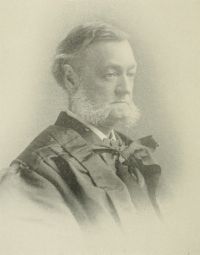
Portrait of George Shiras, Jr. George Shiras, Jr. Scott v. Donald (165 U.S. 58)…

To this we answer that a statute may, upon its face, apply equally to the people of all the states, and yet be a regulation of interstate commerce which a state may not establish. A burden imposed by a state upon interstate commerce is not to be sustained simply because the statute imposing it applies alike to the people of all the states, including the people of the state enacting such statute.
Source: Wikisource

Portrait of George Shiras, Jr. George Shiras, Jr. Scott v. Donald (165 U.S. 58)…

Ct. 273: 'If a statute purporting to have been enacted to protect the public health, the public morals, or the public safety, has no real or substantial relation to those objects, or is a palpable invasion of rights secured by the fundamental law, it is the duty of the courts to so adjudge, and thereby give effect to the constitution.'
It is important to observe that the statute before us does not purport to prohibit either the importation, the manufacture, the sale, or the use of intoxicating liquors.
Source: Wikisource

Portrait of George Shiras, Jr. George Shiras, Jr. Scott v. Donald (165 U.S. 58)…

But the particular state laws that have been most frequently considered, and have occasioned the most discussion, have been those that have sought to regulate or forbid the importation, manufacture, and sale of in toxicating liquors; and the law whose validity we are now to consider is one of that class.
The evils attending the vice of intemperance in the use of spirituous liquors are so great that a natural reluctance is felt in appearing to interfere, even on constitutional grounds, with any law whose avowed purpose is to restrict or prevent the mischief.
Source: Wikisource

Get perspective with Kwize: daily news enlightened by great literature