Summary

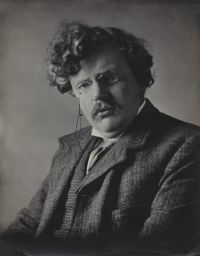
Portrait of Gilbert Keith Chesterton Gilbert Keith Chesterton Appreciations and Criticisms of the Works of Charles Dickens… (1911)

Carlyle had written the story of the French Revolution and had made the story a mere tragedy. Dickens writes the story about the French Revolution, and does not make the Revolution itself the tragedy at all. Dickens knows that an outbreak is seldom a tragedy; generally it is the avoidance of a tragedy. All the real tragedies are silent. Men fight each other with furious cries, because men fight each other with chivalry and an unchangeable sense of brotherhood.
Source: Wikisource

Portrait of Gilbert Keith Chesterton Gilbert Keith Chesterton Appreciations and Criticisms of the Works of Charles Dickens… (1911)

First, a man never or hardly ever does grow sad as he grows old; on the contrary, the most melancholy young lovers can be found forty years afterwards chuckling over their port wine. And second, Dickens never did grow old, even in a physical sense. What weariness did appear in him appeared in the prime of life; it was due not to age but to overwork, and his exaggerative way of doing everything. To call Dickens a victim of elderly disenchantment would be as absurd as to say the same of Keats.
Source: Wikisource

Portrait of Gilbert Keith Chesterton Gilbert Keith Chesterton Appreciations and Criticisms of the Works of Charles Dickens… (1911)

If ever you have looked on better days, If ever you have sat at good men's feasts, If ever been where bells have knolled to church, If ever from your eyelids wiped a tear Or know what 't is to pity and be pitied. There is nothing finer even in Shakespeare than that conception of the circle of rich men all pretending to rough it in the country, and the one really hungry man entering, sword in hand, and praising the city.
Source: Wikisource

Get perspective with Kwize: daily news enlightened by great literature