Summary

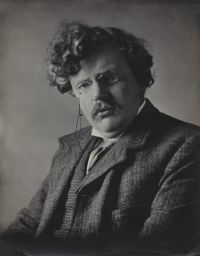
Portrait of Gilbert Keith Chesterton Gilbert Keith Chesterton Heretics — Chapter 14: On Certain Modern Writers and the Institution of the Family (1905)

When we step into the family, by the act of being born, we do step into a world which is incalculable, into a world which has its own strange laws, into a world which could do without us, into a world that we have not made. In other words, when we step into the family we step into a fairy-tale.
This colour as of a fantastic narrative ought to cling to the family and to our relations with it throughout life. Romance is the deepest thing in life; romance is deeper even than reality.
Source: Wikisource

Portrait of Gilbert Keith Chesterton Gilbert Keith Chesterton Heretics — Chapter 14: On Certain Modern Writers and the Institution of the Family (1905)

Every man has hated mankind when he was less than a man. Every man has had humanity in his eyes like a blinding fog, humanity in his nostrils like a suffocating smell. But when Nietzsche has the incredible lack of humour and lack of imagination to ask us to believe that his aristocracy is an aristocracy of strong muscles or an aristocracy of strong wills, it is necessary to point out the truth.
Source: Wikisource

Portrait of Gilbert Keith Chesterton Gilbert Keith Chesterton Heretics — Chapter 14: On Certain Modern Writers and the Institution of the Family (1905)

To be in a romance is to be in uncongenial surroundings. To be born into this earth is to be born into uncongenial surroundings, hence to be born into a romance. Of all these great limitations and frameworks which fashion and create the poetry and variety of life, the family is the most definite and important. Hence it is misunderstood by the moderns, who imagine that romance would exist most perfectly in a complete state of what they call liberty. They think that if a man makes a gesture it would be a startling and romantic matter that the sun should fall from the sky.
Source: Wikisource

Get perspective with Kwize: daily news enlightened by great literature