Summary

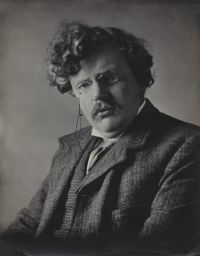
Portrait of Gilbert Keith Chesterton Gilbert Keith Chesterton The Superstition of Divorce — The Story of the Vow (1920)

Men can always be blind to a thing so long as it is big enough. It is so difficult to see the world in which we live, that I know that many will see all I have said here of slavery as a nonsensical nightmare. But if my association of divorce with slavery seems only a far-fetched and theoretical paradox, I should have no difficulty in replacing it by a concrete and familiar picture.
Source: Wikisource

Portrait of Gilbert Keith Chesterton Gilbert Keith Chesterton The Superstition of Divorce — The Story of the Vow (1920)

Nobody takes the word of a spade; and nobody ever took the word of a slave. It marks at least a special stage of transition that the form of freedom was essential to the fact of service, or even of servitude. In this way it is not a coincidence that the word homage actually means manhood. And if there was vow instead of status even in the static parts of Feudalism, it is needless to say that there was a wilder luxuriance of vows in the more adventurous part of it. The whole of what we call chivalry was one great vow. Vows of chivalry varied infinitely from the most solid to the most fantastic
Source: Wikisource

Portrait of Gilbert Keith Chesterton Gilbert Keith Chesterton The Superstition of Divorce — The Story of the Vow (1920)

When we come to workmen and small tradesmen, we find the same vague yet vivid presence of the spirit that can only be called the vow. In this sense there was a chivalry of trades as well as a chivalry of orders of knighthood; just as there was a heraldry of shop-signs as well as a heraldry of shields. Only it happens that in the enlightenment and liberation of the sixteenth century, the heraldry of the rich was preserved, and the heraldry of the poor destroyed.
Source: Wikisource

Get perspective with Kwize: daily news enlightened by great literature