Summary

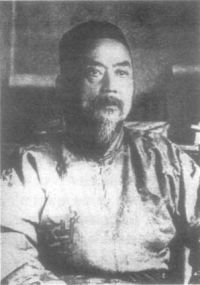
Portrait of Gu Hongming Gu Hongming The Spirit of the Chinese People (1915)

This Home in China is the minature Heaven,—as the State with its civic order, the Chinese Empire,—is the real Heaven, the Kingdom of God come upon this earth, to the Chinese people. Thus, as the gentleman in China with his honour, his Religion of Loyalty is the guardian of the State, the Civic Order, in China, so the Chinese woman, the Chinese gentlewoman or lady, with her debonair charm and grace, her purity, her pudeur, and above all, her Religion of Selflessness,—is the the Guardian Angel of the minature Heaven, the Home in China.
Source: Wikisource

Portrait of Gu Hongming Gu Hongming The Spirit of the Chinese People (1915)

It is religion. But how does religion lighten for the mass of mankind the burden of this mystery? Religion, I say, lightens this burden by giving the mass of mankind a sense of security and a sense of permanence. In presence of the threatening forces of Nature and the cruel merciless passions of their fellowmen and the mystery and terror which these inspire, religion gives to the mass of mankind a refuge—a refuge in which they can find a sense of security; and that refuge is a belief in some supernatural Being or beings who have absolute power and control over those forces which threaten them.
Source: Wikisource

Portrait of Gu Hongming Gu Hongming The Spirit of the Chinese People (1915)

Man cannot be truly just to his neighbour unless he loves him." Therefore the inspiration which made the man and woman see what Joubert calls true justice, the soul of justice called Honour, and thus enable them to discover the secret—the open secret of Goethe, the law of the gentleman of Coufucius—is Love—the love between the man and the woman which gave birth, so to speak, to the law of the gentleman; that secret, the possession of which has enabled mankind not only to build up society and civilisation, but also to establish religion—to find God.
Source: Wikisource

Get perspective with Kwize: daily news enlightened by great literature