Henry Williamson Haynes

Henry Williamson Haynes

Summary

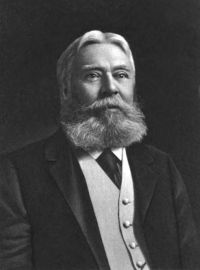
Portrait of Henry Williamson Haynes Henry Williamson Haynes,  Popular Science Monthly (1880)

“ Now, a flourishing civilization with admirable arts, and especially a fixed literary language, presupposes ages of development and progress, so that we see the "prehistoric man" thrust thus at least one stage into "the dark backward and abysm of time." But only monuments inscribed by Nature's own hand are our helpers in the arduous task of attempting to measure by a scale of centuries the duration of the existence of "the fossil man." ”
Source: Wikisource

Portrait of Henry Williamson Haynes Henry Williamson Haynes,  Popular Science Monthly (1880)

“ In such Quaternary gravels and caverns mingled with the bones of numerous extinct species of animals, such as the mammoth, the woolly rhinoceros, and the cave-bear and others, human bones have been discovered, although comparatively rarely, while the implements and objects of man's fabrication are found in large quantities. They are, however, all made of stone, or of the horns and bones of animals. Such human remains as have been discovered show man at this earliest epoch to have been possessed of a cranial development quite equal to the average now. ”
Source: Wikisource

Portrait of Henry Williamson Haynes Henry Williamson Haynes,  Popular Science Monthly (1880)

“ Many have been the definitions given of the term "fossil"; but by the phrase "the fossil man" is intended in this article man as the contemporary of certain species of animals now either totally or locally extinct, which we know only from their bones, dug out of the earth, but as to whose existence history and tradition are silent. Such animal remains are found, mingled with those of species still living ”
Source: Wikisource

Get perspective with Kwize: daily news enlightened by great literature