Summary

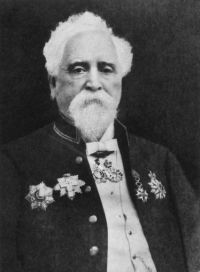
Portrait of Hiram S. Maxim Hiram S. Maxim Artificial and Natural Flight

One may be out driving, the sun may be shining brightly, and the air warm and balmy, when suddenly, without any apparent cause, one finds himself in a cold descending wind. This is the much-dreaded mistral, and if at sea it would be marked by a glassy line on the surface of the water.
Source: Gutenberg

Portrait of Hiram S. Maxim Hiram S. Maxim Artificial and Natural Flight

When we build a steamship, we know that its weight increases as the cube of any one of its dimensions—that is, if the ship is twice as long, twice as wide, and twice as deep it will carry eight times as much; but at the very best, with even higher speed, the load carried by a flying machine will only increase with the square of any one of its dimensions, or perhaps still less.
Source: Gutenberg

Portrait of Hiram S. Maxim Hiram S. Maxim Artificial and Natural Flight

No matter whether it is a ship, a locomotive, or a flying machine that we wish to build, we must first of all consider the ideal, and then approximate it as closely as possible with the material at hand. Suppose it were possible to make a perfect screw, working without friction, and that its weight should only be that of the surrounding air; if it should be 200 feet in diameter, the power of one man, properly applied, would lift him into the air.
Source: Gutenberg

Get perspective with Kwize: daily news enlightened by great literature