Summary

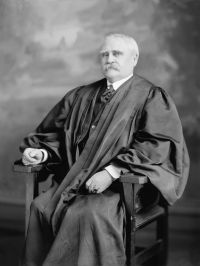
Portrait of Horace Harmon Lurton Horace Harmon Lurton Henry v. A. B. Dick Company — Opinion of the Court

While there are resemblances between the right of the author to 'vend' his copyrighted production, and of the patentee to 'vend' the patented thing, the inherent difference between the production of an author, be it a book, music, or a picture, and that of an inventor, be it a machine, a process, or an article, is so manifest that the exclusive right of one to multiply and sell was declared sufficient to give him that exclusive right to his writings purposed by the Constitution.
Source: Wikisource

Portrait of Horace Harmon Lurton Horace Harmon Lurton Henry v. A. B. Dick Company — Opinion of the Court

An attack upon the rights under a patent because it secures a monopoly to make, to sell, and to use, is an attack upon the whole patent system. We are not at liberty to say that the Constitution has unwisely provided for granting a monopolistic right to inventors, or that Congress has unwisely failed to impose limitations upon the inventor's exclusive right of use.
Source: Wikisource

Portrait of Horace Harmon Lurton Horace Harmon Lurton Henry v. A. B. Dick Company — Opinion of the Court

But could it be said that the doctrine of contributory infringement operates to extend the monopoly of the patent over subjects not within it because one subjects himself to the penalties of the law when he sells unpatented things for an infringing use? If a patentee says, 'I may suppress my patent if I will. I may make and have made devices under my patent, but I will neither sell nor permit anyone to use the patented things,' he is within his right, and none can complain.
Source: Wikisource

Get perspective with Kwize: daily news enlightened by great literature