Summary

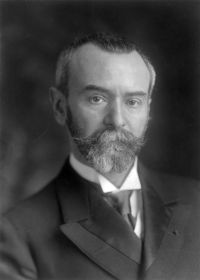
Portrait of J. J. Jusserand J. J. Jusserand With Americans of Past and Present Days

It can truly be said that no single man risked nor did more for the United States than de Grasse, the single one of the leaders to whom no memorial has been dedicated.
The news spread like wild-fire; the camp was merry with songs and shouts; in Philadelphia the joy was indescribable; crowds pressed before the house of La Luzerne, cheering him and his country, while in the streets impromptu orators, standing on chairs, delivered mock funeral orations on the Earl of Cornwallis. "You have," Rochambeau wrote to the admiral, "spread universal joy throughout America, with which she is wild."
Source: Gutenberg

Portrait of J. J. Jusserand J. J. Jusserand With Americans of Past and Present Days

On two tragic occasions, at a century's distance, the fate of the United States has trembled in the balance: would they be a free nation? Would they continue to be one nation? A leader was wanted on both occasions, a very different one in each case. This boon was granted to the American people, who had a Washington when a Washington was needed, and a Lincoln when a Lincoln could save them.
Source: Gutenberg

Portrait of J. J. Jusserand J. J. Jusserand With Americans of Past and Present Days

The year of the alliance, 1778, Sébastien Mercier, in his De la Littérature, had drawn up a picture of the French people's expectation: "Perhaps it is in America that the human race will transform itself, adopt a new and sublime religion, improve sciences and arts, and become the representative of the nations of antiquity. A haven of liberty, Grecian souls, all strong and generous souls will develop or meet there, and this great example given to the universe will show what men can do when they are of one mind and combine their lights and their courage."
Source: Gutenberg

Get perspective with Kwize: daily news enlightened by great literature