Summary

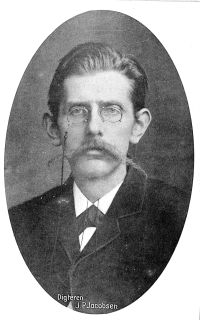
Portrait of J. P. Jacobsen J. P. Jacobsen Mogens, and Other Stories

When the sun had set on the evening of the next day, they walked about together in the garden. Arm in arm they walked very slowly and very silently up one path and down the other, out of the fragrance of mignonettes through that of roses into that of jasmine. A few moths fluttered past them; out in the grain-field a wild duck called, otherwise most of the sounds came from Thora’s silk dress.
“How silent we can be,” exclaimed Thora.
“And how we can walk!” Mogens continued, “we must have walked about four miles by now.”
Source: Gutenberg

Portrait of J. P. Jacobsen J. P. Jacobsen Mogens, and Other Stories

Fonss let the children go while she remained sitting here.
No, Tage was right, it had not been good for them. How far from her they had already gone in that short hour! How they looked at her, not like her children, but like their father’s! How quick they were to desert her as soon as they saw that not every motion of her heart was theirs! But she was not only Tage’s and Elinor’s mother alone; she was also a human being on her own account, with a life of her own and hopes of her own, quite apart from them. But she was, perhaps, not quite as young as she had believed herself to be.
Source: Gutenberg

Portrait of J. P. Jacobsen J. P. Jacobsen Mogens, and Other Stories

Tage rose.
“Hard,” he said, “hard, hard, oh were it nothing but that, but it is horrible—unnatural; it is enough to drive one insane, merely to think of it. Have you any idea of the things you make me think of? My mother loved by a strange man, my mother desired, held in the arms of another and holding him in hers. Nice thoughts for a son, worse than the worst insult—but it is impossible, must be impossible, must be! Are the prayers of a son to be as powerless as that! Elinor, don’t sit there and cry, come and help me beg mother to have pity on us.”
Source: Gutenberg

Get perspective with Kwize: daily news enlightened by great literature