Summary

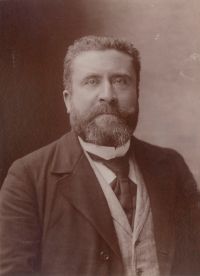
Portrait of Jean Jaurès Jean Jaurès Studies in Socialism — XIII. The Question of Method (1906)

The most striking thing in the Manifesto is not the chaos of the programme, but the chaos of the method. By a stroke of physical force the proletariat will have established itself in power in the beginning; by a stroke of force it will have wrenched power from the revolutionary bourgeoisie. It will "capture the democracy"; the fact is, in other words, that it will suspend it, since it substitutes the dictatorial will of a single class for the freely consulted will of the majority of the citizens.
Source: Wikisource

Portrait of Jean Jaurès Jean Jaurès Studies in Socialism — XIII. The Question of Method (1906)

The modern labourer, instead of bettering himself with the progress of industry, sinks deeper and deeper below the conditions of existence of his own class. The workman becomes a pauper, and pauperism increases even more rapidly than either population or wealth. It is therefore perfectly clear that the bourgeoisie is unfit to be any longer the ruling class in society and to impose its class conditions on society as a ruling law.
Source: Wikisource

Portrait of Jean Jaurès Jean Jaurès Studies in Socialism — XIII. The Question of Method (1906)

Nevertheless if Marx had only meant to talk of a relative pauperisation, how would he have been able to conclude that capitalism would force its slaves down below the minimum living wage, and thus, by a series of irresistible reflexes, make it inevitable that the working class should bring on the destruction of the bourgeoisie?
Source: Wikisource

Get perspective with Kwize: daily news enlightened by great literature