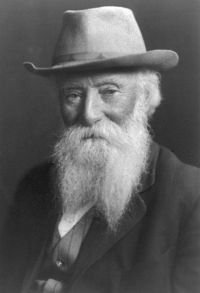
John Burroughs

John Burroughs

Summary

Portrait of John Burroughs John Burroughs,  The Last Harvest

“ Emerson thought that science as such bereaved Nature of her charm. To the man of little or no imagination or sensibility to beauty, Nature has no charm anyhow, but if he have these gifts, they will certainly survive scientific knowledge, and be quickened and heightened by it.
After we have learned all that the astronomers can tell us about the midnight heavens, do we look up at the stars with less wonder and awe? After we have learned all that the chemist and the physicist can tell us about matter—its interior activities and its exterior laws and relations—do we admire and marvel less?
”
Source: Gutenberg

Portrait of John Burroughs John Burroughs,  The Last Harvest

“ If I knew only Thoreau, I should think coöperation of good men impossible. Must we always talk for victory, and never once for truth, for comfort, and joy? Centrality he has, and penetration, strong understanding, and the higher gifts,—the insight of the real, or from the real, and the moral rectitude that belongs to it; but all this and all his resources of wit and invention are lost to me, in every experiment, year after year, that I make, to hold intercourse with his mind. Always some weary captious paradox to fight you with, and the time and temper wasted. ”
Source: Gutenberg

Portrait of John Burroughs John Burroughs,  The Last Harvest

“ I do not hope to find the Emerson of my youth—the man of daring and inspiring affirmation, the great solvent of a world of encrusted forms and traditions, which is so welcome to a young man—because I am no longer a young man. Emerson is the spokesman and prophet of youth and of a formative, idealistic age. His is a voice from the heights which are ever bathed in the sunshine of the spirit. I find that something one gets from Emerson in early life does not leave him when he grows old. ”
Source: Gutenberg

Get perspective with Kwize: daily news enlightened by great literature