Summary

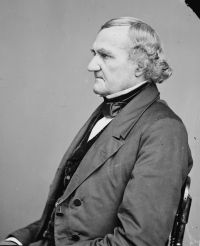
Portrait of John Catron John Catron Dubuque and Pacific Railroad Company v…

It would be an offer of the most enormous premium to every man whose ingenuity is great enough to practice deception upon Congress. I have no fears that this court will make itself responsible for the consequences which would follow from such a rule.
I do not ask you honors to say that a strained construction in favor of the public right should be put on any statute. Let every grantee have what Congress gives him in words which are tolerably plain to the apprehension of intelligent men. But do not give, by construction, what the grant itself was not understood to convey.
Source: Wikisource

Portrait of John Catron John Catron Dubuque and Pacific Railroad Company v…

Where Congress has said one thing plainly and distinctly in a law passed and enrolled, it cannot be modified or in any manner changed by proof, however clear, that the committee which reported the bill, or any other member of the body, or even all of them together, meant to say a different thing. But when an obscurely worded law has received a construction at the hands of those who passed it, that construction will not be lightly set aside by any court.
Source: Wikisource

Portrait of John Catron John Catron Dubuque and Pacific Railroad Company v…

In fact, a prohibition of one thing often involves an actual permission to do what is not thus prohibited. Thus, the constitutional provision which prevents Congress from interfering with the slave trade prior to 1808 has always been regarded as giving authority to prohibit it after that period. In like manner, the limitation which restricts us to the Territory of Iowa, in the selection of lands, is, in effect, an authority to select the alternate sections within five miles of the whole length of the river, wherever such land can be found within any portion of that Territory.
Source: Wikisource

Get perspective with Kwize: daily news enlightened by great literature