Summary

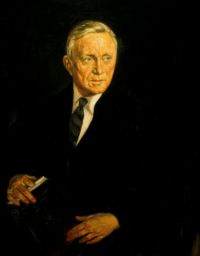
Portrait of William O. Douglas William O. Douglas United States v. Union Pacific Railroad Company…

We would have to forget history and read legislation with a jaundiced eye to hold that when Congress granted only a right of way and reserved all 'mineral lands' it nonetheless endowed the railroad with the untold riches underlying the right of way. Such a construction would run counter to the established rule that land grants are construed favorably to the Government, that nothing passes except what is conveyed in clear language, and that if there are doubts they are resolved for the Government, not against it.
Source: Wikisource

Portrait of William O. Douglas William O. Douglas United States v. Union Pacific Railroad Company…

There are no precedents which give the mineral rights to the owner of the right of way as against the United States. We would make a violent break with history if we construed the Act of 1862 to give such a bounty. We would, indeed, violate the language of the Act itself. To repeat, we cannot read 'mineral lands' in § 3 as inapplicable to the right of way granted by § 2 and still be faithful to the standard which governs the construction of a statute that grants a part of the public domain to private interests.
Source: Wikisource

Portrait of William O. Douglas William O. Douglas United States v. Union Pacific Railroad Company…

But, as we have seen, the congressional policy in 1862 was one of liberality, prodigality as it later came to appear, in order to encourage the construction of the railroad. It is inconceivable that the Congress that made generous loans to the Union Pacific and granted it enormous areas of land for resale at substantial gain would have balked at its profitable resort to the minerals underneath the right of way in a manner completely consistent with the satisfactory operation of the railroad.
Source: Wikisource

Get perspective with Kwize: daily news enlightened by great literature