Summary

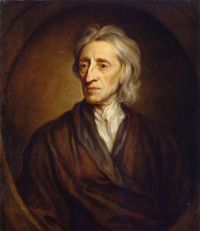
Portrait of John Locke John Locke,  An Essay Concerning Humane Understanding…

“ Knowledge, say you, is only the perception of the agreement or disagreement of our own ideas: but who knows what those ideas may be? Is there anything so extravagant as the imaginations of men's brains? Where is the head that has no chimeras in it? Or if there be a sober and a wise man, what difference will there be, by your rules, between his knowledge and that of the most extravagant fancy in the world? They both have their ideas, and perceive their agreement and disagreement one with another. ”
Source: Gutenberg

Portrait of John Locke John Locke,  An Essay Concerning Humane Understanding…

“ Let ever so much probability hang on one side of a covetous man's reasoning, and money on the other; it is easy to foresee which will outweigh. Earthly minds, like mud walls, resist the strongest batteries: and though, perhaps, sometimes the force of a clear argument may make some impression, yet they nevertheless stand firm, and keep out the enemy, truth, that would captivate or disturb them. Tell a man passionately in love, that he is jilted; bring a score of witnesses of the falsehood of his mistress, it is ten to one but three kind words of hers shall invalidate all their testimonies. ”
Source: Gutenberg

Portrait of John Locke John Locke,  An Essay Concerning Humane Understanding…

“ For language being the great conduit, whereby men convey their discoveries, reasonings, and knowledge, from one to another, he that makes an ill use of it, though he does not corrupt the fountains of knowledge, which are in things themselves, yet he does, as much as in him lies, break or stop the pipes whereby it is distributed to the public use and advantage of mankind. He that uses words without any clear and steady meaning, what does he but lead himself and others into errors? And he that designedly does it, ought to be looked on as an enemy to truth and knowledge. ”
Source: Gutenberg

Get perspective with Kwize: daily news enlightened by great literature