Summary

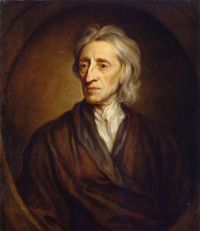
Portrait of John Locke John Locke Of the Conduct of the Understanding (1901)

Some will not admit an opinion not authorized by men of old, who were then all giants in knowledge. Nothing is to be put into the treasury of truth or knowledge which has not the stamp of Greece or Rome upon it, and since their days will scarce allow that men have been able to see, think, or write. Others, with a like extravagancy, contemn all that the ancients have left us, and being taken with the modern inventions and discoveries, lay by all that went before, as if whatever is called old must have the decay of time upon it, and truth too were liable to mold and rottenness.
Source: Wikisource

Portrait of John Locke John Locke Of the Conduct of the Understanding (1901)

I call it a clog, for it hangs upon the mind so as to hinder its vigor and activity in the pursuit of other contemplations; and advances itself little or not at all in the knowledge of the thing which it so closely hugs and constantly pores on. Men thus possessed are sometimes as if they were so in the worse sense, and lay under the power of an enchantment. They see not what passes before their eyes, hear not the audible discourse of the company, and when by any strong application to them they are roused a little, they are like men brought to themselves from some remote region
Source: Wikisource

Portrait of John Locke John Locke Of the Conduct of the Understanding (1901)

The world is apt to cast great blame on those who have an indifferency for opinions, especially in religion. I fear this is the foundation of great error and worse consequences. To be indifferent which of two opinions is true, is the right temper of the mind that preserves it from being imposed on, and disposes it to examine with that indifferency till it has done its best to find the truth; and this is the only direct and safe way to it. But to be indifferent whether we embrace falsehood or truth is the great road to error.
Source: Wikisource

Get perspective with Kwize: daily news enlightened by great literature