Summary

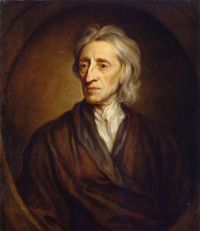
Portrait of John Locke John Locke An Essay Concerning Human Understanding…

But to say or think there are no such, because we conceive nothing of them, is no better an argument than if a blind man should be positive in it, that there was no such thing as sight and colours, because he had no manner of idea of any such thing, nor could by any means frame to himself any notions about seeing. The ignorance and darkness that is in us no more hinders nor confines the knowledge that is in others, than the blindness of a mole is an argument against the quicksightedness of an eagle.
Source: Wikisource

Portrait of John Locke John Locke An Essay Concerning Human Understanding…

An unfair way which some men take with themselves : who, because of the inconceivableness of something they find in one, throw themselves violently into the contrary hypothesis, though altogether as unintelligible to an unbiassed understanding. This serves not only to show the weakness and the scantiness of our knowledge, but the insignificant triumph of such sort of arguments ; which, drawn from our own views, may satisfy us that we can find no certainty on one side of the question : but do not at all thereby help us to truth by running into the opposite opinion
Source: Wikisource

Portrait of John Locke John Locke An Essay Concerning Human Understanding…

It is impossible that men should ever truly seek or certainly discover the agreement or disagreement of ideas themselves, whilst their thoughts flutter about, or stick only in sounds of doubtful and uncertain significations. Mathematicians abstracting their thoughts from names, and accustoming themselves to set before their minds the ideas themselves that they would consider, and not sounds instead of them, have avoided thereby a great part of that perplexity, puddering, and confusion, which has so much hindered men’s progress in other parts of knowledge.
Source: Wikisource

Get perspective with Kwize: daily news enlightened by great literature