Summary

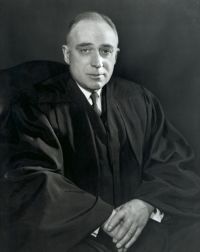
Portrait of John Marshall Harlan II John Marshall Harlan II Service v. Dulles — Opinion of the Court

First, he contends that the Secretary's exercise of discretion was invalid since the findings and opinion of the Loyalty Review Board, upon which alone the Secretary acted, were void, because they were rendered without jurisdiction [13] and were based upon procedures assertedly contrary to due process of law. Even conceding that the Secretary's powers under the McCarran Rider were such that he was not required to state the grounds for his decision, petitioner urges, his decision cannot stand because he did in fact rely upon grounds that are invalid.
Source: Wikisource

Portrait of John Marshall Harlan II John Marshall Harlan II Service v. Dulles — Opinion of the Court

First, following the decision of the Deputy Under Secretary upon a determination of the Department Loyalty Security Board, there was to be an appeal to the Secretary only if the Deputy's action had been adverse to the employee. In other words, under these Regulations the action of the Deputy Under Secretary, if favorable to the employee, was to be final, the Secretary reserving to himself power to act further only if his Deputy's action was unfavorable to the employee.
Source: Wikisource

Portrait of John Marshall Harlan II John Marshall Harlan II Service v. Dulles — Opinion of the Court

The President continued:
'I am sure you will agree that in exercising the discretion conferred upon you by Section 1213, every effort should be made to protect the national security without unduly jeopardizing the personal liberties of the employees within your jurisdiction. Procedures designed to accomplish these two objectives are set forth in Public Law 733, 81st Congress, which authorizes the summary suspension of civilian officers and employees of various departments and agencies of the Government, including the Department of State.
Source: Wikisource

Get perspective with Kwize: daily news enlightened by great literature