Summary

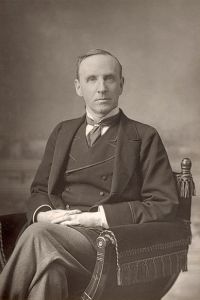
Portrait of John Morley John Morley,  Rousseau (Volume 1 and 2)

“ We do not rightly seize the type of Socrates if we can never forget that he was the husband of Xanthippe, nor David's if we can only think of him as the murderer of Uriah, nor Peter's if we can simply remember that he denied his master. Our vision is only blindness, if we can never bring ourselves to see the possibilities of deep mystic aspiration behind the vile outer life of a man, or to believe that this coarse Rousseau, scantily supping with his coarse mate, might yet have many glimpses of the great wide horizons that are haunted by figures rather divine than human. ”
Source: Gutenberg

Portrait of John Morley John Morley,  Rousseau (Volume 1 and 2)

“ The sound of the bells, which has always moved me to a singular degree, the singing of the birds, the glory of the weather, the sweetness of the landscape, the scattered rustic dwellings in which my imagination placed our common home;—all this so struck me with a vivid, tender, sad, and touching impression that I saw myself as in an ecstasy transported into the happy time and the happy place where my heart, possessed of all the felicity that could bring it delight, without even dreaming of the pleasures of sense, should share joys inexpressible. ”
Source: Gutenberg

Portrait of John Morley John Morley,  Rousseau (Volume 1 and 2)

“ A vehement objective temperament, like Voltaire's, is instantly roused by one of these penetrative stimuli into angry and tenacious resistance. A proud and collected soul, like Goethe's, loftily follows its own inner aims, without taking any heed of the perturbations that arise from want of self-collection in a world still spelling its rudiments. A sensitive and depressed spirit, like Rousseau's or Cowper's, finds itself without any of these reacting kinds of force, and the first stroke of cruelty or oppression is the going out of a divine light. ”
Source: Gutenberg

Get perspective with Kwize: daily news enlightened by great literature