Summary

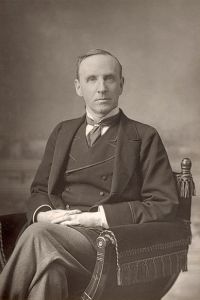
Portrait of John Morley John Morley Diderot and the Encyclopædists…

But in Jacques le Fataliste, Diderot never raises his eye for an instant to the blue æther, his ear catches no harmony of awe, of hope, nor even of a noble despair. With a kind of clumsy jubilancy he holds us fast in the ways and language of thick and clogged sense. The fatrasie of old France has its place in literature, but it can never be restored in ages when a host of moral anxieties have laid siege to men’s souls. The uncommon is always welcome to the lover of art, but it must justify itself.
Source: Gutenberg

Portrait of John Morley John Morley Diderot and the Encyclopædists…

We must have men; but men of genius, no; no, on my word; of them we need none. ’Tis they who change the face of the globe; and in the smallest things folly is so common and so almighty, that you cannot mend it without an infinite disturbance. Part of what they have dreamt comes to pass, and part remains as it was; hence two gospels, the dress of a harlequin. The wisdom of Rabelais’s moral is the true wisdom both for his own repose and that of other people: to do one’s duty so so, always to speak well of the prior, and to let the world go as it lists.
Source: Gutenberg

Portrait of John Morley John Morley Diderot and the Encyclopædists…

In other words, art has its own laws, as it has its own aims, and these are not the laws and aims of nature. To mock at rules is to overthrow the conditions that make a painting or a statue possible. To send the pupil away from the model to the life of the street, the gaol, the church, is to send him forth without teaching him for what to look. To make light of the study of anatomy in art, is like allowing the composer to forget thorough bass in his enthusiasm, or the poet in his enthusiasm to forget the number of syllables in his verse.
Source: Gutenberg

Get perspective with Kwize: daily news enlightened by great literature