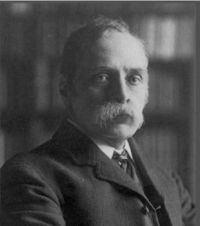
John Percival Postgate

John Percival Postgate

Summary

Portrait of John Percival Postgate John Percival Postgate 1911 Encyclopædia Britannica (1911)

One of the most vexed questions of textual criticism, and one which divides scholars more perhaps than any other, is the question to what extent admitted imperfections and inconsistencies may properly be left in a text as due to the default of an author rather than of a scribe or compositor. No universal rule is here attainable. Each case must be considered on its merits; and the critic's procedure must of necessity be “eclectic”—an epithet often used with a tinge of reproach, the ground for which it is not easy to discover.
Source: Wikisource

Portrait of John Percival Postgate John Percival Postgate 1911 Encyclopædia Britannica (1911)

Most people take their notions of a classical book not from its traditional form but from a “received” or vulgate text. This in the case of most writings is fairly readable, because it has been purged by the continuous emendation of scholars during several centuries. But the received conjectures which make this text acceptable have no more authority in themselves than equally good conjectures which have not yet won their way into the text, and it is clearly illogical to treat a text largely built upon conjectures as if it were now beyond the reach of conjecture.
Source: Wikisource

Portrait of John Percival Postgate John Percival Postgate 1911 Encyclopædia Britannica (1911)

Tibullus has no leanings to an active life: his ideal is a quiet retirement in the country with the loved one at his side. He has no ambition and not even the poet’s yearning for immortality. As Tibullus loved the country life so he clung to its faiths, and in an age of crude materialism and the grossest superstition, he was religious in the old Roman way.
Source: Wikisource

Get perspective with Kwize: daily news enlightened by great literature