Summary

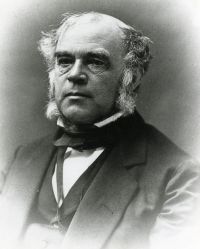
Portrait of John William Draper John William Draper History of the Conflict Between Religion and Science… (1874)

Nothing more than courage and industry was needed to overcome Nature, and to seize the abounding advantages she offered.
But must not men be animated by a great principle who successfully transform the primeval solitudes into an abode of civilization, who are not dismayed by gloomy forests, or rivers, mountains, or frightful deserts, who push their conquering way in the course of a century across a continent, and hold it in subjection?
Source: Wikisource

Portrait of John William Draper John William Draper History of the Conflict Between Religion and Science… (1874)

From Moorish Spain the gentle and gallant idea of chivalry had been brought, and with it the noble sentiment of “personal honor,” destined in the course of time to give a code of its own to Europe.
The return of the papacy to Rome was far from restoring the influence of the popes over the Italian Peninsula. More than two generations had passed away since their departure, and, had they come back even in their original strength, they could not have resisted the intellectual progress that had been made during their absence.
Source: Wikisource

Portrait of John William Draper John William Draper History of the Conflict Between Religion and Science… (1874)

Their census, periodically taken, showed that the population was doubling itself every twenty-five years; it justified the expectation that at the close of that century it would number nearly one hundred million souls.
A silent continent had been changed into a scene of industry; it was full of the din of machinery and the restless moving of men. Where there had been an unbroken forest, there were hundreds of cities and towns. To commerce were furnished in profusion some of the most important staples, as cotton, tobacco, breadstuffs. The mines yielded incredible quantities of gold, iron, coal.
Source: Wikisource

Get perspective with Kwize: daily news enlightened by great literature