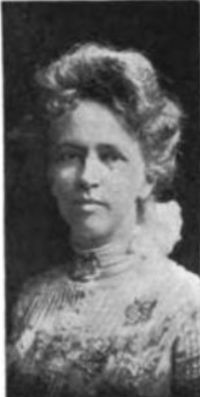
Katharine Elizabeth Dopp

Katharine Elizabeth Dopp

Summary

Portrait of Katharine Elizabeth Dopp Katharine Elizabeth Dopp The Early Cave-Men

By so doing, the killing of wild beasts, which, when considered as an end in itself, arrests the development of the finer feelings by fixing attention upon suffering without any purpose, becomes transformed into an act of great social significance; for we must not forget that the cave-men, by exterminating the most dangerous of the wild beasts, made the earth a more fit dwelling place for all succeeding ages.
Source: Gutenberg

Portrait of Katharine Elizabeth Dopp Katharine Elizabeth Dopp The Early Cave-Men

But there was no punk to be found.
The rhinoceros had trampled it under his feet.
In vain Sharpeyes tried to find a spark.
When at last he knew that the fire was all gone, he decided to go back to the fire country.
He went as far as the dry, rocky country, where he was chased by a pack of wolves.
He barely escaped to a neighboring tree, where the wolves kept him treed for a day.
When the wolves went away, he was nearly starved; he was tired and discouraged, too.
His clothing was torn, and his weapons were lost; so he dared not cross the dry country again.
Source: Gutenberg

Portrait of Katharine Elizabeth Dopp Katharine Elizabeth Dopp The Early Cave-Men

Lesson I. The inexperienced child may think of a cave as a dark, damp place, fit only for the habitation of wild animals. The cave as a habitation for man is a new idea and cannot be understood unless it is related to the natural and social conditions which prevailed during the earliest stages of culture. The child who has read The Tree-Dwellers knows that before people learned to use fire, the caves were inhabited by the cave-bear, the cave-lion, the sabre-toothed felis, and by packs of spotted hyenas. He is prepared to understand why people were glad to live in caves.
Source: Gutenberg

Get perspective with Kwize: daily news enlightened by great literature