Summary

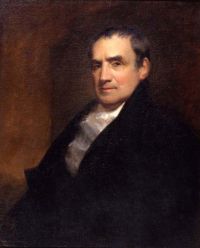
Portrait of Mathew Carey Mathew Carey Appeal to the Wealthy of the Land (1833)

I am well aware of the superabundance of female labour—of the direful effects of over-driven competition, not only on the comfort and happiness, but on the morals of the labouring classes of society, in every quarter of the globe. But I contend for it, that every principle of honour, justice, and generosity, forbids the employer to take advantage of the distress and wretchedness of those he employs, and cut down their wages below the minimum necessary to procure a sufficiency of plain food and of clothes to guard against the inclemency of the weather.
Source: Wikisource

Portrait of Mathew Carey Mathew Carey Appeal to the Wealthy of the Land (1833)

It is incredible, but nevertheless true, that the Edinburgh Review, after having distinctly admitted that for 190 years the poor-laws had not "increased pauperism, or population, or the poor rates," to any perceivable extent, has carried its blind opposition to them to such an extreme length as to advocate the substitution of mendicity, with all its immoralities, its frauds, its impositions, its degradation! So much for a bigoted devotion to theory, in utter disregard of fact or experience.
Source: Wikisource

Portrait of Mathew Carey Mathew Carey Appeal to the Wealthy of the Land (1833)

Naples is crowded with beggars, whose number defies all calculation. I feel it indeed a fruitless task for my pen to attempt a description of the scenes I have witnessed, and I lay it down in despair—But no! what I can tell is as much as need be known of human misery. As we step out of our house, twenty hats and open hands are stretched out towards us. We cannot take ten steps without meeting with a beggar, who crosses our path, and with groans and piteous exclamations solicits our mite. Women, often dressed in black silk, and veiled, intrude themselves impudently upon us.
Source: Wikisource

Get perspective with Kwize: daily news enlightened by great literature