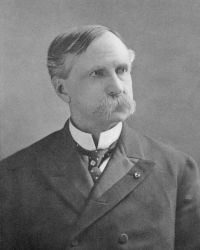
Carroll Davidson Wright

Carroll Davidson Wright

Summary

Portrait of Carroll Davidson Wright Carroll Davidson Wright 1911 Encyclopædia Britannica, Volume 16… (1911)

LABOUR LEGISLATION. Regulation of labour, [1] in some form or another, whether by custom, royal authority, ecclesiastical rules or by formal legislation in the interests of a community, is no doubt as old as the most ancient forms of civilization. And older than all civilization is the necessity for the greater part of mankind to labour for maintenance, whether freely or in bonds, whether for themselves and their families or for the requirements or superfluities of others.
Source: Wikisource

Portrait of Carroll Davidson Wright Carroll Davidson Wright 1911 Encyclopædia Britannica, Volume 16… (1911)

Turning back to still earlier times, legislation—whatever its source or authority—must clearly be devoted to aims very different from modern aims in regulating labour, when it arose before the labourer, as a man dependent on an “employer” for the means of doing work, had appeared, and when migratory labour was almost unknown through the serfdom of part of the population and the special status secured in towns to the artisan.
Source: Wikisource

Portrait of Carroll Davidson Wright Carroll Davidson Wright 1911 Encyclopædia Britannica, Volume 16… (1911)

Important decisions in 1888 and 1889 showed this belief Meaning of “wages.” to have been ill-founded. The essential point lies in the definition of the word “wages” as the “recompense, reward or remuneration of labour,” which implies not necessarily any gross sum in question between employer and workmen where there is a contract to perform a certain piece of work, but that part of it, the real net wage, which the workman was to get as his recompense for the labour performed.
Source: Wikisource

Get perspective with Kwize: daily news enlightened by great literature