Summary

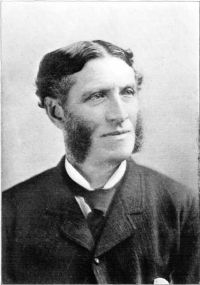
Portrait of Matthew Arnold Matthew Arnold St. Paul and Protestantism, with an Essay on Puritanism and the Church of England

Hebraism at its best is beauty and charm; Hellenism at its best is also beauty and charm. As such they can unite; as anything short of this, each of them, they are at discord, and their separation must continue. The flower of Hellenism is a kind of amiable grace and artless winning good-nature, born out of the perfection of lucidity, simplicity, and natural truth; the flower of Christianity is grace and peace by the annulment of our ordinary self through the mildness and sweet reasonableness of Christ. Both are eminently humane, and for complete human perfection both are required
Source: Gutenberg

Portrait of Matthew Arnold Matthew Arnold St. Paul and Protestantism, with an Essay on Puritanism and the Church of England

If ever there was a case in which the wonder-working power of attachment, in a man for whom the moral sympathies and the desire of righteousness were all-powerful, might employ itself and work its wonders, it was here. Paul felt this power penetrate him; and he felt, also, how by perfectly identifying himself through it with Jesus, and in no other way, could he ever get the confidence and the force to do as Jesus did. He thus found a point in which the mighty world outside man, and the weak world inside him, seemed to combine for his salvation.
Source: Gutenberg

Portrait of Matthew Arnold Matthew Arnold St. Paul and Protestantism, with an Essay on Puritanism and the Church of England

But can anything more tend to make the Church what the Puritans reproach it with being,—a mere lump of sacerdotalism and ritualism,—than if the Puritans, who are free to come into it with their disregard of sacerdotalism and ritualism and so to leaven it, refuse to come in, and leave it wholly to the sacerdotalists and ritualists? What can be harder upon the laity of the national Church, what so inconsiderate of the national good and advantage, as to leave us at the mercy of one single element in the Church, and deny us just the elements fit to mix with this element and to improve it?
Source: Gutenberg

Get perspective with Kwize: daily news enlightened by great literature