Summary

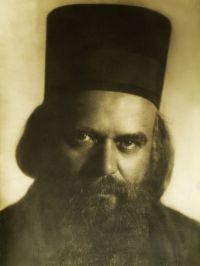
Portrait of Nikolaj Velimirović Nikolaj Velimirović The Religious Spirit of the Slavs

Never has there existed in the world such a social power binding man to man and commanding each to take and bear the other's sorrows as Christianity did. Your sins are my sins, my sins are your sins. Such a conception of the Christian religion had Tolstoi in common with Dostojevsky and Gogol, with the Holy Synod, with the popular religious conscience of millions and millions of the living and the dead, in the orthodox world, and with all the jurodivi, the fools for Christ's sake. That is the religious spirit of the best of the Slavs.
Source: Gutenberg

Portrait of Nikolaj Velimirović Nikolaj Velimirović The Religious Spirit of the Slavs

Slav Christianity is something greater than the Bible. Looking at an ikon, a Russian mujik perceives the Bible incarnated in a saint's life-drama. Mystery of sin, mystery of atonement, mystery of heroic suffering, mystery of the daily presence of Christ among us in holy wine, in holy bread, in holy water, in holy word, in holy deed, in every sanctified substance, even in matter as in spirit, mystery of communion of sins and of virtues—all are recorded once in the Bible, and all are recorded and repeated also in our daily life—that is what we call our Slav Orthodoxy.
Source: Gutenberg

Portrait of Nikolaj Velimirović Nikolaj Velimirović The Religious Spirit of the Slavs

The Holy Synod, representing Slav Orthodoxy, perceived life as a drama with a beginning and an end in space and time. From his point of view, Tolstoi thought it possible for mankind to stop a mistaken course of things and to begin anew, to cast away all the burdens of culture, of State, Church, militarism, worldly ambitions, the vanities of towns, to draw the curtain on the past and to come back to the field and forest, to plough and sow, to listen to the life of Nature and to live with Nature and God in unison.
Source: Gutenberg

Get perspective with Kwize: daily news enlightened by great literature