Summary

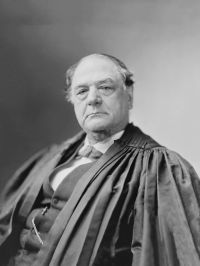
Portrait of Noah Haynes Swayne Noah Haynes Swayne Springer v. United States — Opinion of the Court

It is a matter of regret that terms so uncertain and vague in so important a point are to be found in the Constitution. We shall seek in vain for any antecedent settled legal meaning to the respective terms. There is none. We shall be as much at a loss to find any disposition of either which can satisfactorily determine the point.' There being many carriages in some of the States, and very few in others, he points out the preposterous consequences if such a tax be laid and collected on the principle of apportionment instead of the rule of uniformity.
Source: Wikisource

Portrait of Noah Haynes Swayne Noah Haynes Swayne Springer v. United States — Opinion of the Court

It was well held that where such evils would attend the apportionment of a tax, the Constitution could not have intended that an apportionment should be made. This view applies with even greater force to the tax in question in this case. Where the population is large and the incomes are few and small, it would be intolerably oppressive.
Source: Wikisource

Portrait of Noah Haynes Swayne Noah Haynes Swayne Springer v. United States — Opinion of the Court

He insists that if the tax there in question was a direct tax, so would be a tax on ships, according to their tonnage. He suggests that the boundary line between direct and indirect taxes be settled by 'a species of arbitration,' and that direct taxes be held to be only 'capitation or poll taxes, and taxes on lands and buildings, and general assessments, whether on the whole property of individuals or on their whole real or personal estate.
Source: Wikisource

Get perspective with Kwize: daily news enlightened by great literature