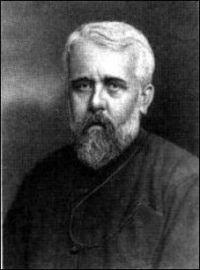
Paul Birukoff

Paul Birukoff

Summary

Portrait of Paul Birukoff Paul Birukoff The Life of Tolstoy (1911)

So enchanting were the mountains to Leo Tolstoy in his approach to Stary-Yurt.
The great natural beauties of the Caucasus, the wild mountaineers, the no less wild Russians, the Cossacks of the Terek—all this new, or rather regenerating, condition of life had such a beneficial influence on Leo Tolstoy that he threw off, like a dirty shell, all the worldly, infected atmosphere of the life in Russia in which he had so nearly perished. And this regenerating and vivifying process awakened in him two great forces: religion and creative power.
Source: Wikisource

Portrait of Paul Birukoff Paul Birukoff The Life of Tolstoy (1911)

All the wise men of the world whom Tolstoy addressed with the question of the meaning of life answered that life was evil and meaningless; and he decided to quit life, and was near to suicide. But his love for the people, his interest in the life of the workers, who saw a meaning in life, saved him. He put to himself the question: “Is life perhaps evil and meaningless because I am living wrongly? That is to say, is my life evil and meaningless—my life and that of all those of my circle who, like myself, do not see any meaning in life?”
Source: Wikisource

Portrait of Paul Birukoff Paul Birukoff The Life of Tolstoy (1911)

The substance of religion, as Tolstoy had always faintly conceived it, was the relation of man to the fundamental principle of the universe; this relation, and his unity with it, produced in man the conviction of indestructibility, and belief in immortality. Without this belief, life, with the eternal dread of death, would be terribly absurd—even worse than annihilation itself. The conceptions which led to this belief in immortality were love, self-sacrifice, service to others, to the world, to God—generally, the sacrifice of the ego and devotion to humanity.
Source: Wikisource

Get perspective with Kwize: daily news enlightened by great literature