Summary

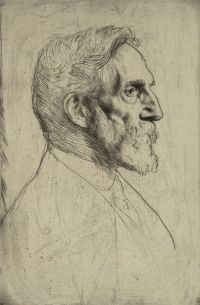
Portrait of Philip Norman Philip Norman London Signs and Inscriptions

Something of monastic calm seemed to linger about the old home and grounds of the begging friars, crowned by part of their church, which since Edward VI.’s time has been handed over to the Dutch congregation of London. Outside, in Broad Street, there was the roar and confusion of a mighty traffic; within the sacred precinct there was peace: wheeled vehicles seldom entered the very foot passengers, I have thought, used to slacken their pace, and relax for a moment the grim, determined look which, as a rule, characterizes the man whose mind is bent on business.
Source: Gutenberg

Portrait of Philip Norman Philip Norman London Signs and Inscriptions

Even now there is a house at the corner of Lloyd’s Row and Spa Cottages, the residence of the last proprietor, which recalls the vanished glory of other days by the inscription in capital letters, ‘islington spa, or new tunbridge wells.’ At the back, in the cellar of No. 6, Spa Cottages, I have seen grotto-work with stone pilasters; on each side are steps descending.
Source: Gutenberg

Portrait of Philip Norman Philip Norman London Signs and Inscriptions

The space is covered with miles upon miles of dull monotonous streets; pleasant gardens have disappeared, hills are levelled, [xiv] valleys filled up, wells choked, the clear streams turned into sewers, nothing remaining to remind us of what has gone before except the names, and here and there an old house, a carving or inscription. The existence of a few of these mementoes has attracted me to Islington and Clerkenwell, and must be my excuse for describing in detail several of the spas and places of entertainment with which in the eighteenth century this region abounded.
Source: Gutenberg

Get perspective with Kwize: daily news enlightened by great literature