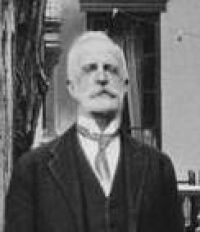
Richard Rogers Bowker

Richard Rogers Bowker

Summary

Portrait of Richard Rogers Bowker Richard Rogers Bowker Copyright, Its History And its Law (1912)

When we are talking of the right of an author we must distinguish between the mere right to his manuscript, and to any copy which he may choose to make of it, as his property, just like any other personal chattel, and the right to multiply copies to the exclusion of every other person. Nothing can be more distinct than these two things. The common law does give a man who has composed a work a right to that composition, just as he has a right to any other part of his personal property
Source: Wikisource

Portrait of Richard Rogers Bowker Richard Rogers Bowker Copyright, Its History And its Law (1912)

It is a monopoly not in the offensive sense, but in the sense of private and personal ownership; the public is not the loser but is the gainer by the protection and encouragement given to the author. The whole aim of copyright protection is to permit the author to sell as he pleases and to transfer his rights collectively or severally to such assigns as he may choose. Copyright is a monopoly only in the sense that any ownership is a monopoly.
Source: Wikisource

Portrait of Richard Rogers Bowker Richard Rogers Bowker Copyright, Its History And its Law (1912)

A musical score is definitely a writing, for it is even more than a literary manuscript, originally in the personal handwriting of the composer himself, without the intervention of a stenographer or a typewriting machine. Therefore, if the narrowest meaning of the word ' writings ' should be interpreted into the Constitution such as would exclude sculptures and other works which are admittedly proper and legal subjects of copyright, it would still specifically include musical and dramatic as well as literary manuscripts.
Source: Wikisource

Get perspective with Kwize: daily news enlightened by great literature