Summary

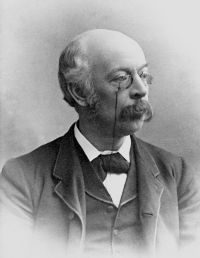
Portrait of Robert Adamson Robert Adamson,  Fichte — Chapter I. Introductory (1881)

“ When one examines the general characteristics of the new intellectual productions of Germany, more especially in the sphere of philosophy, one is struck by the close resemblance in fundamental idea to that just noted. It was the essence of Kant’s endeavour, both in speculative and in ethical research, to show that the ultimate unit, the conscious subject, was not a mere atom, devoid of intrinsic characteristics, receiving all knowledge from without, and impelled to act solely by the natural relations between his individual impulses and things. ”
Source: Wikisource

Portrait of Robert Adamson Robert Adamson,  Fichte — Chapter I. Introductory (1881)

“ On the one hand, the rude shock given by the political revolution and its consequences to the amorphous organisation of the German States, absolutely forced upon the German mind a conception which otherwise might long have remained dormant—the conception of a united, single German power. History amply shows us that it is often by what we in our ignorance call the brutal necessity of facts that an idea gains for itself a place among the realities of life ”
Source: Wikisource

Portrait of Robert Adamson Robert Adamson,  Fichte — Chapter I. Introductory (1881)

“ Not every one could bend the bow of Kant and Fichte: the philosophic principle that the individual consciousness is the ultimate test of truth and goodness, became for weaker minds a practical precept of moral and intellectual scepticism. The universal element sank out of sight, and there remained only, as aim of life, the satisfaction of individual, personal caprice. ”
Source: Wikisource

Get perspective with Kwize: daily news enlightened by great literature