Summary

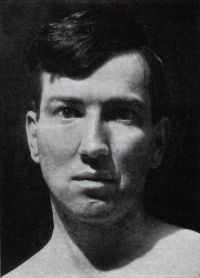
Portrait of Robert Graves Robert Graves Lars Porsena; or, the future of swearing and improper language (1927)

And there is every reason why Shakespeare’s sonnets should be censored at the same time, and more strictly, because the public even blinds its eyes to the painful history that the sequence gives and makes it ‘extravagant flattery of a patron’ or an ‘academic exercise.’ Joyce is read as obscene instead of successfully past obscenity: Shakespeare instead of being read as past lust is not even read as lusting.
Source: Gutenberg

Portrait of Robert Graves Robert Graves Lars Porsena; or, the future of swearing and improper language (1927)

Occasionally in low life one hears a picturesque ancestral oath or an imaginative modern one coined by some true blasphemer and carefully stored by an admirer for his own use—“as in wild earth a Grecian vase”. But for the most part the dreary repetition of the two sexual mainstays of barrack-room swearing is the despair of the artist. This is a mechanical age, and even our swearing has been standardized.
Source: Gutenberg

Portrait of Robert Graves Robert Graves Lars Porsena; or, the future of swearing and improper language (1927)

For as soon as there is sufficient weakening of the taboos to permit an accurate and detailed account of swearing and obscenity, then, by that very token, swearing and obscenity can have no future worth prophesying about, but only a past more or less conjectural because undocumented.
Though Samuel Butler’s definition of “Nice People” as “people with dirty minds” can be misunderstood by critics who refuse to differentiate between the humourously obscene and the obscenely obscene, I like it. No nice person is uncritical
Source: Gutenberg

Get perspective with Kwize: daily news enlightened by great literature