Summary

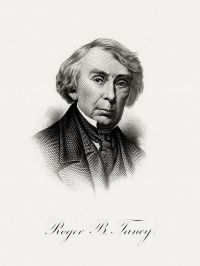
Portrait of Roger B. Taney Roger B. Taney O'Reilly v. Morse — Opinion of the Court

Neither could the man who first discovered that steam might, by a proper arrangement of machinery, be used as a motive power to grind corn or spin cotton, claim the right to the exclusive use of steam as a motive power for the purpose of producing such effects.
Again, the use of steam as a motive power in printing-presses is comparatively a modern discovery. Was the first inventor of a machine or process of this kind entitled to a patent, giving him the exclusive right to use steam as a motive power, however developed, for the purpose of marking or printing intelligible characters?
Source: Wikisource

Portrait of Roger B. Taney Roger B. Taney O'Reilly v. Morse — Opinion of the Court

No invention can possibly be made, consisting of a combination of different elements of power, without a thorough knowledge of the properties of each of them, and the mode in which they operate on each other. And it can make no difference, in this respect, whether he derives his information from books, or from conversation with men skilled in the science. If it were otherwise, no patent, in which a combination of different elements is used, could ever be obtained.
Source: Wikisource

Portrait of Roger B. Taney Roger B. Taney O'Reilly v. Morse — Opinion of the Court

Can there be any good reason why the art of printing at a distance, by means of the motive power of the electric or galvanic current, should stand on different principles? Is there any reason why the inventor's patent should cover broader ground? It would be difficult to discover any thing in the act of Congress which would justify this distinction. The specification of this patentee describes his invention or discovery, and the manner and process of constructing and using it; and his patent, like inventions in the other arts above mentioned, covers nothing more.
Source: Wikisource

Get perspective with Kwize: daily news enlightened by great literature