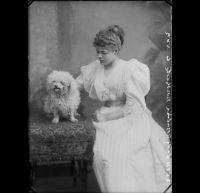
Rosalind Northcote

Rosalind Northcote

Summary

Portrait of Rosalind Northcote Rosalind Northcote The Book of Herbs

De la Quintinye thought Purslane “one of the prettiest plants in a kitchen-garden, the red or golden being the most agreeable to the eye and the more delicate and difficult to raise than the green. The thick stalks of Purslain that is to run to seed, are good to pickle in Salt and Vinegar for Winter Sallads.” I do not agree with him; the leaves are pretty enough, but thick, fleshy, and of no special charm. The graceful Coriander or the lace-like leaves of Sweet Cicely are far more to be admired.
Source: Gutenberg

Portrait of Rosalind Northcote Rosalind Northcote The Book of Herbs

Rosemary has always been of more importance than any other herb, and more than most of them put together. It has been employed at weddings and funerals, for decking the church and for garnishing the banquet hall, in stage-plays, and in “swelling discontent,” of a too great reality; as incense in religious ceremonies, and in spells against magic; “in sickness and in health”; eminently as a symbol, and yet for very practical uses. It is quite an afterthought to regard it as a plant.
Source: Gutenberg

Portrait of Rosalind Northcote Rosalind Northcote The Book of Herbs

If a sprig of Basil were left under a pot, it would, in time, turn to scorpions! It is a strange plant altogether. The ancient Greeks thought that it would not grow unless when the seed was sown railing and abuse should be poured forth at the same time. Much blossom on the broom foretells a plentiful harvest of corn. “Les anciens” according to La petite Corbeille believed that a pot of Gilly-flowers, growing in a window, would fade if the master of the house died; and similar curious sympathies in Sage and Honesty and Rosemary have already been noticed.
Source: Gutenberg

Get perspective with Kwize: daily news enlightened by great literature