Summary

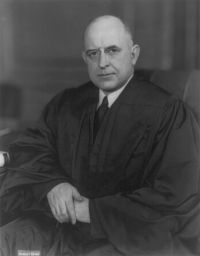
Portrait of Stanley Forman Reed Stanley Forman Reed Brady v. Southern Railway Company…

It is difficult to imagine how, except by sheer guessing, or by drawing upon some undisclosed superior fund of wisdom, the Court reaches the conclusion that respondent need not have foreseen that trains would be backed over the wrong end of closed derailers. The evidence of railroad men who had worked on railroads showed it was foreseeable. Doubtless judges know more about formal logic and legal principles than do brakemen, engineers, and divisional superintendents. I am not so certain that they know more about the danger of keeping a defective rail immediately opposite a derailer.
Source: Wikisource

Portrait of Stanley Forman Reed Stanley Forman Reed Brady v. Southern Railway Company…

He signalled the train to back into the storage track just before the fatal accident. Although this misuse of the derailer was an act of negligence, it is mere speculation as to whether that negligence is chargeable to the decedent or another. Without this unexpected occurrence, the adequacy of the rail vis-a-vis a properly used derailer is unquestioned. It was entirely disconnected from the earlier act of the carrier in placing the weak rail in the track. The mere fact that with a sound rail the accident might not have happened is not enough.
Source: Wikisource

Portrait of Stanley Forman Reed Stanley Forman Reed Brady v. Southern Railway Company…

When the evidence is such that without weighing the credibility of the witnesses there can be but one reasonable conclusion as to the verdict, the court should determine the proceeding by non-suit, directed verdict or otherwise in accordance with the applicable practice without submission to the jury, or by judgment notwithstanding the verdict.
Source: Wikisource

Get perspective with Kwize: daily news enlightened by great literature