Summary

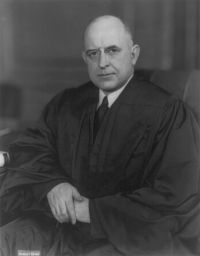
Portrait of Stanley Forman Reed Stanley Forman Reed Dalehite v. United States — Opinion of the Court

Purchasers cannot try out drugs to determine whether they kill or cure. Consumers cannot test the youngster's cowboy suit or the wife's sweater to see if they are apt to burst into fatal flames. Carriers, by land or by sea, cannot experiment with the combustibility of goods in transit. Where experiment or research is necessary to determine the presence or the degree of danger, the product must not be tried out on the public, nor must the public be expected to possess the facilities or the technical knowledge to learn for itself of inherent but latent dangers.
Source: Wikisource

Portrait of Stanley Forman Reed Stanley Forman Reed Dalehite v. United States — Opinion of the Court

Of course, it is not a tort for government to govern, and the decision to aid foreign agriculture by making and delivering fertilizer is no actionable wrong. Nor do we find any indication that in these deliberations that any decision was made to take a calculated risk of doing what was done, in the way it was done, on the chance that what did happen might not happen. Therefore, we are not deterred by fear that governmental liability in this case would make the discretion of executives and administrators timid and restrained.
Source: Wikisource

Portrait of Stanley Forman Reed Stanley Forman Reed Dalehite v. United States — Opinion of the Court

If, as often will be the case, a dangerous product is also a useful one, he is under a strict duty to follow each step of its distribution with warning of its dangers and with information and directions to keep those dangers at a minimum.
It is obvious that the Court's only choice is to hold the Government's liability to be nothing or to be very heavy, indeed. But the magnitude of the potential liability is due to the enormity of the disaster and the multitude of its victims.
Source: Wikisource

Get perspective with Kwize: daily news enlightened by great literature