Stephen Graham

Stephen Graham

Summary

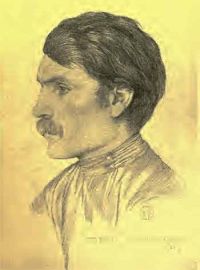
Portrait of Stephen Graham Stephen Graham Russia in 1916 (1917)

THE DARK HAVEN From the end of November to the middle of January the sun does not rise in Russia’s new haven. All would be dark even at mid-day were it not for the snow. The stars never set. The lights in the little wooden dwellings are never put out. Great gales blow, rolling up mountainous waves on the Arctic. Or Polar mists swallow up everything. Snowstorms go on indefinitely and the frost may be forty degrees, fifty degrees. Here is no town, no civilisation. Alexandrovsk has no pavement, no high street, no cinema theatre, no hotel, not even a tavern.
Source: Gutenberg

Portrait of Stephen Graham Stephen Graham Russia in 1916 (1917)

It is possible for an Englishman in Russia to form a fair idea of each day’s news, so the Russian also can grasp it. That is a splendid improvement on last year when we got only those laconic non-committal communiqués which our smart English journalists can cause to blossom with occult significance for our English newspapers, but which in very truth translated into Russian merely gave the impression that we were doing nothing.
Russia feels us closer. The distance across is not so great. Day by day every one feels that we are all working happily together for one end and with one interest.
Source: Gutenberg

Portrait of Stephen Graham Stephen Graham Russia in 1916 (1917)

As in England and France, every family has its personal stake in the war, and for many that stake has become the wooden cross over a grave. Young and splendid regiments are still to be seen marching, however, and to look at them in their new uniforms one might think for a moment that it was only the beginning, Russia was entering the war, and no one had yet been lost.
There is engaging enthusiasm still, and withal the noted Slav patience that does not ask for things to be done quickly. A slow war in many respects suits the Russian temperament.
Source: Gutenberg

Get perspective with Kwize: daily news enlightened by great literature