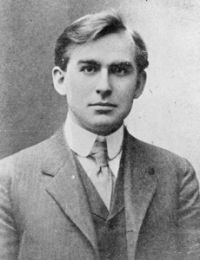
Tenney Frank

Tenney Frank

Summary

Portrait of Tenney Frank Tenney Frank Vergil: A Biography

In essence the poetry of the Aeneid is never Homeric, despite the incorporation of many Homeric lines. It is rather a sapling of Vergil's Hellenistic garden, slowly acclimated to the Italian soil, fed richly by years of philosophic study, braced, pruned, and reared into a tree of noble strength and classic dignity. The form and majesty of the tree bespeak infinite care in cultivation, but the fruit has not lost the delicate tang and savour of its seed. The poet of the Ciris, the Copa, the Dirae, and the Bucolics is never far to seek in the Aeneid.
Source: Gutenberg

Portrait of Tenney Frank Tenney Frank Vergil: A Biography

Hardships whet the ingenuity of man; God himself for man's own good brought an end to the age of golden indolence, shook the honey from the trees, and gave vipers their venom. Man has been left alone to contend with an obstinate nature, and in that struggle to discover his own worth. The Georgics are far removed from pastoral allegory; Italy is no longer Arcadia, it is just Italy in all its glory and all its cruelty.
Vergil's delight in nature is essentially Roman, though somewhat more self-conscious than that of his fellows.
Source: Gutenberg

Portrait of Tenney Frank Tenney Frank Vergil: A Biography

Sextus Pompey still held Sicily and the central seas, ready to betray the state at the first mis-step on Octavian's part. At Rome itself were many citizens in high position who were at variance with the government, quite prepared to declare for Antony or Pompey if either should appear a match for the young heir of Caesar. Clearly the great epic of Rome could not have matured in that atmosphere of suspicion, intrigue, and selfishness. The convulsions of the dying republic, beheld day by day near at hand, could only have inspired a disgust sufficient to poison a poet's sensitive hope.
Source: Gutenberg

Get perspective with Kwize: daily news enlightened by great literature