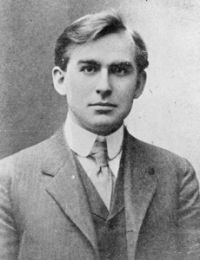
Tenney Frank

Biographical details

Portrait of Tenney Frank Tenney Frank,  Vergil: A Biography

“ In essence the poetry of the Aeneid is never Homeric, despite the incorporation of many Homeric lines. It is rather a sapling of Vergil's Hellenistic garden, slowly acclimated to the Italian soil, fed richly by years of philosophic study, braced, pruned, and reared into a tree of noble strength and classic dignity. The form and majesty of the tree bespeak infinite care in cultivation, but the fruit has not lost the delicate tang and savour of its seed. The poet of the Ciris, the Copa, the Dirae, and the Bucolics is never far to seek in the Aeneid. ”
Source: Gutenberg

Portrait of Tenney Frank Tenney Frank,  Vergil: A Biography

“ Hardships whet the ingenuity of man; God himself for man's own good brought an end to the age of golden indolence, shook the honey from the trees, and gave vipers their venom. Man has been left alone to contend with an obstinate nature, and in that struggle to discover his own worth. The Georgics are far removed from pastoral allegory; Italy is no longer Arcadia, it is just Italy in all its glory and all its cruelty.
Vergil's delight in nature is essentially Roman, though somewhat more self-conscious than that of his fellows.
”
Source: Gutenberg

Portrait of Tenney Frank Tenney Frank,  Life and literature in the Roman republic (1930)

“ Similar must have been the exaltation of this Roman when he felt that he could lay aside childish superstitions, suddenly pierce the confines of the universe and behold the nebulae shaping into planets, when he realized, as he thought, that energy lived forever, that matter was eternal, that the universe was infinite, that in the survival of the fit there were promises of eternal progress, that law and order ruled the universe. ”
Source: Gutenberg

Get perspective with Kwize: daily news enlightened by great literature