Summary

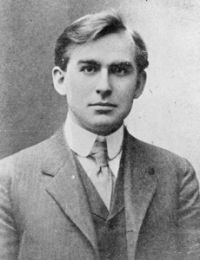
Portrait of Tenney Frank Tenney Frank Life and literature in the Roman republic (1930)

Similar must have been the exaltation of this Roman when he felt that he could lay aside childish superstitions, suddenly pierce the confines of the universe and behold the nebulae shaping into planets, when he realized, as he thought, that energy lived forever, that matter was eternal, that the universe was infinite, that in the survival of the fit there were promises of eternal progress, that law and order ruled the universe.
Source: Gutenberg

Portrait of Tenney Frank Tenney Frank Life and literature in the Roman republic (1930)

It is not an accident that genuine realistic tragedy failed to find its fully accepted place upon the stage till the nineteenth century, in a word not till thoroughgoing democracy, by preaching the equality of men, had persuaded us of the dignity of the mere human being, and through the prose novel taught the man on the street to concern himself with his fellows as worthy themes of art.
Source: Gutenberg

Portrait of Tenney Frank Tenney Frank Life and literature in the Roman republic (1930)

Catullus at first fed on the same fare, but one stirring experience set him free. Thereafter he wrote songs that no Greek could have claimed. They have the lilt, beauty, and precision of his models, but a natural freedom, a lucidity, and a convincing passion that make the epigrams of the Garland seem lucubratory. They obviously spring out of a society that is less artificial and out of a life that grows in a young world.
Lucretius again refuses to fall into a conventional pattern. He has no standards, no proportions, no models.
Source: Gutenberg

Get perspective with Kwize: daily news enlightened by great literature