Walter Crane

Walter Crane

Summary

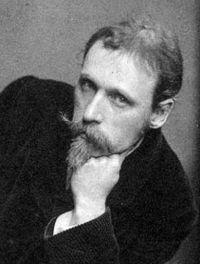
Portrait of Walter Crane Walter Crane 1911 Encyclopedia Britannica (1911)

The true object of art-teaching is very much like that of all education—to inform the mind, while you give skill to the hand—not to impose certain rigid rules, or fixed recipes and methods of work, but while giving instruction in definite methods and the use of materials, to allow for the individual development of the student and enable him to acquire the power to express himself through different media without forgetting the grammar and alphabet of design.
Source: Wikisource

Portrait of Walter Crane Walter Crane 1911 Encyclopedia Britannica (1911)

All who care for art value it as a means of expression, and for the pleasure and beauty it infuses into all it touches, or as essential and inseparable from life itself. Seeing then the importance of art from any point of view, individual, social, commercial, intellectual, emotional, economic, it should be important to us in our systems of art-teaching not to lose sight of the end in arranging the means—not to allow our teaching to be dominated by either dilettantism or commercialism, neither to be feeble for want of technical skill, nor to sacrifice everything to technique.
Source: Wikisource

Portrait of Walter Crane Walter Crane 1911 Encyclopedia Britannica (1911)

Some schools of painting, sculpture and architecture have preserved fine and noble traditions which yet allowed for individuality. Such traditions may be said to have been characteristic of the art of the middle ages. It often happens, too, when many streams of artistic influence meet, there may be a certain domination or ascendancy of the traditions of one art over the others, which is injurious in its effects on those arts and diverts them from their true path. The domination of individualistic painting and sculpture over the arts of design during the last century or two is a case in point.
Source: Wikisource

Get perspective with Kwize: daily news enlightened by great literature