Summary

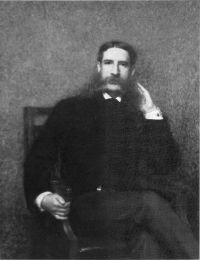
Portrait of Edward Hornor Coates Edward Hornor Coates The Academy of the Fine Arts and Its Future (1890)

As is the legend of our Philadelphia Library, descended to us from the hands of Franklin, Logan and Rush, "to pour forth riches for the common good is to be godlike!" And for ourselves, should we not be the chief gainers, in securing great works of art—works which, as Ruskin says, contain the greatest number of the greatest ideas. Here then are both the power and the opportunity. Shall we not with sincerity and earnestness undertake to do something which is worthy of the doing?
Source: Wikisource

Portrait of Edward Hornor Coates Edward Hornor Coates The Academy of the Fine Arts and Its Future (1890)

For after all, as has been well said, "it is by the aid of sincerity and conscience that the artist is enabled to see more clearly than other men the eternal limits of his own art—to see with Sophocles that nothing, not even art itself, is of any worth to man, invested as he is by the whole army of evil, unless it is in the deepest and highest sense good."
Source: Wikisource

Portrait of Edward Hornor Coates Edward Hornor Coates The Academy of the Fine Arts and Its Future (1890)

Matthew Arnold says that "Culture is the acquaintance with the best that has been said and known in the world." To further such acquaintance, and in the words of the Charter, "to promote the cultivation of the Fine Arts, by introducing correct and elegant copies from the works of the first masters in sculpture and painting," was the purpose of those who, in 1805, founded the Pennsylvania Academy, the oldest art institution in the United States.
Source: Wikisource

Get perspective with Kwize: daily news enlightened by great literature