Summary

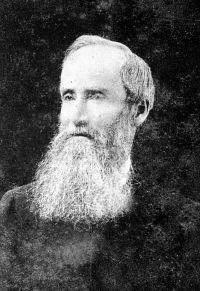
Portrait of Wentworth Webster Wentworth Webster,  Basque Legends; With an Essay on the Basque Language

“ Lelo has been imagined by some to be the name of a Basque hero; Zara, or Zarat, who kills him, the name of another; and the two reproduce the story of Agamemnon and Ægisthus. Others, with more probability, take Lelo, as is certainly the case in other poems, for a mere refrain (the everlasting Lelo, as a Basque proverb has it) used by the singer merely to give the key to the tune or rhythm to which he modulates the rest. Chaho, with his usual audacity, would translate it “glory,” and render it thus:—
Finished is the glory! dead is the glory,
Our glory!
Old age has killed the glory,
Our glory!
”
Source: Gutenberg

Portrait of Wentworth Webster Wentworth Webster,  Basque Legends; With an Essay on the Basque Language

“ One peculiarity of the Basque, and especially of the Tartaro legends, is that the hero of them is so often a madman, an idiot, or a fool. If we can trust our memory, the case is the same in the Slavonic representatives of Odysseus.3 But the Basques seem to dwell upon and to repeat the idea in a peculiar way; they ring the changes on all states, from the wild madman, like the Scandinavian Berserker, through the idiot and fool, to the mere blockhead and ninny. ”
Source: Gutenberg

Portrait of Wentworth Webster Wentworth Webster,  Basque Legends; With an Essay on the Basque Language

“ Errua, Enuchenta, Ergela, Sosua, Tontua, are terms employed to designate the heroes who have sometimes, to our modern apprehension, little of the idiot or fool, except the name. Can it be that the power which put out the sun’s fiery eye was looked upon as a beneficent being in a burning tropic land, while, as the legend travelled northward, the act seemed more like that of madness, or of senseless stupidity? ”
Source: Gutenberg

Get perspective with Kwize: daily news enlightened by great literature