Summary

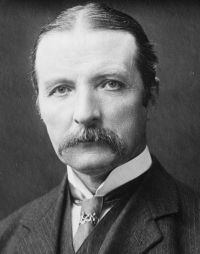
Portrait of William Archer William Archer God and Mr. Wells: A Critical Examination of 'God the Invisible King'

Tired of waiting for news from the God on the cloudy mountain-top, did they not make themselves a synthetic deity, finite, friendly, and very like the Invisible King, inasmuch as he seems to have worked no miracles, and done, in fact, nothing whatever? But the God on the mountain-top was wroth, and accused them of idolatry, surely not without reason. For what is idolatry if it be not manufacturing a God, whether out of golden earrings or out of humanitarian sentiments, and then bowing down and worshipping it?
Source: Gutenberg

Portrait of William Archer William Archer God and Mr. Wells: A Critical Examination of 'God the Invisible King'

It is better, no doubt, to die in a good cause than to throw away life [Pg 99] in the pursuit of folly or vice; but is it not playing with words to say that even the end of a martyr to science like Captain Scott, or a martyr to humanity like Edith Cavell, is a triumph over death and the grave? It is a triumph over cowardice, baseness, the love of ease and safety, all the paltrier aspects of our nature; but a triumph over death it is not.
Source: Gutenberg

Portrait of William Archer William Archer God and Mr. Wells: A Critical Examination of 'God the Invisible King'

Why is egoism evil? Because a world in which it reigned supreme would very soon come to an end, or at any rate could not support anything like the abundance of life which is rendered possible by mutual aid and co-operation. Why are order, justice, courage, humanity good? Because they enable more people to lead fuller lives than would be possible in the absence of such guiding principles. But in all this we assume the validity of the standard—"life"—which is precisely what pessimism denies. And pessimism may quite conceivably be in the right on't.
Source: Gutenberg

Get perspective with Kwize: daily news enlightened by great literature