Summary

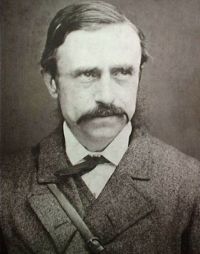
Portrait of William Boyd Dawkins William Boyd Dawkins Early Man in Britain and His Place in the Tertiary Period (1880)

As the evidence stands at present the geological record is silent as to man's appearance in Europe in the Pleiocene age. It is very improbable that he will ever be proved to have lived in this quarter of the world at that remote time, since of all the European mammalia then alive only one has survived to our own days. Nevertheless, the arrival of one solitary living species marks the dawn of that order of nature to which man belongs, and in which, in the succeeding Pleistocene age, he formed the central and most imposing figure.
Source: Wikisource

Portrait of William Boyd Dawkins William Boyd Dawkins Early Man in Britain and His Place in the Tertiary Period (1880)

If, however, we accept the evidence advanced in favour of Meiocene man, it is incredible that he alone of all the mammalia living in those times in Europe should not have perished, or have changed into some other form in the long lapse of ages during which many Meiocene genera and all the Meiocene species have become extinct. Those who believe in the doctrine of evolution will see the full force of this argument against the presence of man in the Meiocene fauna, not merely of Europe but of the whole world.
Source: Wikisource

Portrait of William Boyd Dawkins William Boyd Dawkins Early Man in Britain and His Place in the Tertiary Period (1880)

The introduction of this civilisation is the starting-point of the history of the present inhabitants of Europe. To the Neolithic peoples we owe the rudiments of the culture which we ourselves enjoy. The arts which they introduced have never been forgotten, and all subsequent progress has been built upon their foundation. Their cereals are still cultivated by the farmer, their domestic animals still minister to us, and the arts of which they only possessed the rudiments, have developed into the industries—spinning, weaving, pottery-making, mining
Source: Wikisource

Get perspective with Kwize: daily news enlightened by great literature