Summary

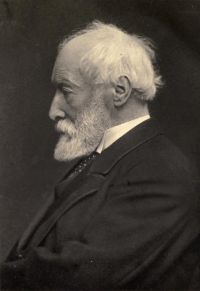
Portrait of William Duguid Geddes William Duguid Geddes Historical characteristics of the Celtic race (1885)

You are met to-night as a Celtic Society, and that, too, as a Celtic Society in connection with the University—can it be justified? Has such an Association a right to exist, to make demands upon the students' time and attention, at a period when there is so much both to do and to know that needs to be done and to be known? It is a question not hastily to be answered, though some bold and crude spirits might at once volunteer an answer in the negative, consigning all things Gaelic, as they would all things Greek, to one limbo, a quiet euthanasia.
Source: Wikisource

Portrait of William Duguid Geddes William Duguid Geddes Historical characteristics of the Celtic race (1885)

At the dawn of recorded history, we find the Celt already occupying a vast area of Western Europe, and exercising a wide ascendancy. We know of no period during which he is not in possession; we find him always in the stream of history, never in the fountain. From low down the Danube, along by the ridges of the Alps, we discern his tribes entrenched; and the topography of Western and Middle Europe, in so far as its river names and mountain names are concerned, rests on a Celtic basis, and is unintelligible, unless from Celtic roots, even in regions from which the Celtic race has long retired.
Source: Wikisource

Portrait of William Duguid Geddes William Duguid Geddes Historical characteristics of the Celtic race (1885)

Yet, without claiming such superlative potency for the Celtic intellect and character, we may feel confident that it has a distinctive differentia of its own which makes it worthy of our homage, worthy, therefore, of our efforts to preserve it, a peculiar aroma attaching to it, a sparkling, yet tender old-world weirdness which the world ought not willingly to let die.
Source: Wikisource

Get perspective with Kwize: daily news enlightened by great literature